How Do Roller Shutters Work? Manual vs Electric Explained
If you’ve ever watched a roller shutter glide up or down and wondered how do roller shutters work, you’re not alone. Most people don’t give the mechanics a second thought until something goes wrong, a shutter jams halfway, a motor stops responding, or a strap snaps mid-pull. Understanding what’s actually happening behind the guide rails gives you a real advantage when it comes to maintenance, repairs, and choosing the right system for your property.
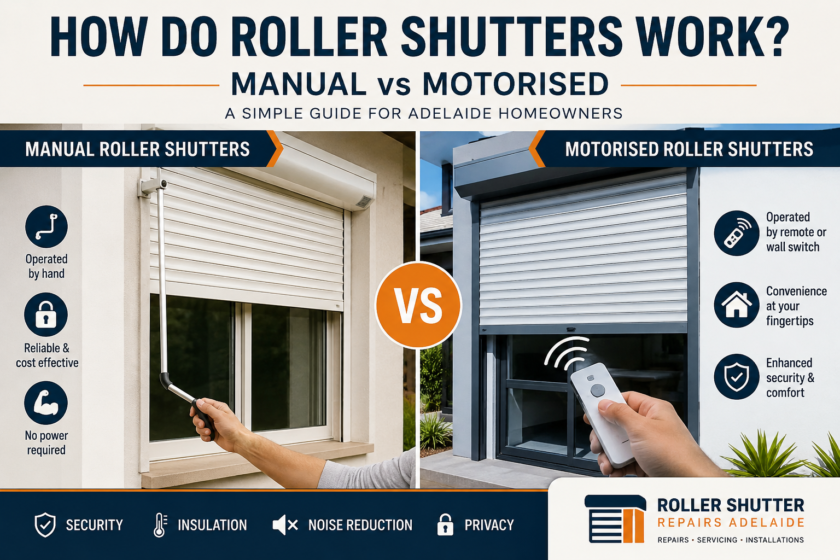
At their core, roller shutters are surprisingly straightforward. A curtain of interlocking slats wraps around an axel at the top of the opening, operated either by hand or by a battery or electric motor. But the differences between manual and electric systems go well beyond convenience, they affect security, durability, and long-term running costs.
With over 39 years of hands-on experience repairing and maintaining roller shutters across Adelaide, our team at Roller Shutter Repairs Adelaide has worked on every type of system inside and out. This article breaks down exactly how both manual and electric roller shutters operate, component by component, so you can make informed decisions, whether you’re troubleshooting a fault or considering an upgrade from manual to electric.
Why roller shutters matter in Adelaide homes
Adelaide’s climate is genuinely punishing. Summers regularly hit 40°C or above, and the city sits in a region where bushfire smoke, dust storms, and intense UV radiation are facts of life rather than rare events. Roller shutters sit at the intersection of these pressures, providing a single barrier that handles heat, light, weather, and security simultaneously. Before you can fully appreciate how do roller shutters work in practice, it helps to understand why so many Adelaide homeowners and business owners rely on them in the first place.
Adelaide’s climate pushes shutters hard
South Australian summers are one of the most demanding environments for any building product. When the temperature climbs past 40°C, unprotected glass allows solar heat gain that pushes indoor temperatures up sharply, forcing air conditioners to work overtime. A well-fitted roller shutter reduces heat transfer through windows and doors by blocking direct sunlight before it even reaches the glass. This means your cooling system runs less frequently during the peak demand months of January and February, which shows up directly on your energy bills.
The Australian Government’s Your Home guide confirms that external shading, including roller shutters, is one of the most effective strategies for reducing unwanted solar heat gain in Australian homes.
Winter matters too. Adelaide nights can drop sharply, and closed roller shutters add an insulating layer that slows heat escaping through glass. The same shutter that keeps heat out in summer works to keep warmth inside during cooler months, making it a year-round asset rather than a seasonal fix.
Security and privacy for residential and commercial properties
Roller shutters are one of the most visible deterrents you can install on a property. A shutter fully covering a window or door presents a significantly harder target than standard glass alone, and the physical barrier means any would-be intruder faces a much longer and noisier effort to gain entry. For retail businesses along busy Adelaide strips, this matters enormously overnight when foot traffic drops and shopfronts become vulnerable.
Privacy is an equally practical concern. Many homes in Adelaide’s inner suburbs sit close to neighbouring properties or busy roads. Roller shutters give you precise control over how much visibility you allow, whether that means fully closed for complete privacy at night or partially open to allow airflow while blocking sightlines from the street. That level of flexibility is something curtains and blinds simply cannot match.
Noise reduction in a growing city
Adelaide’s urban and suburban growth means more properties now sit near main roads, flight paths, or commercial precincts than was the case a generation ago. Roller shutters with foam-filled or insulated slats dampen external noise noticeably compared to a single pane of glass. If your bedroom faces a main road or your office backs onto a car park, a quality roller shutter can cut noise intrusion enough to make a genuine difference to daily comfort and sleep quality.
This combination of climate resilience, security, privacy, and acoustic performance explains why roller shutters are proportionally more common in South Australia than in many other Australian states. They perform a lot of functions through a single product, and understanding the mechanics behind each component helps you keep the entire system operating reliably for years.
The key components and what they do
To understand how do roller shutters work, you first need to know what each part actually does. A roller shutter looks like a single moving sheet from the outside, but it is built from several distinct components that each carry a specific job. If any one of them deteriorates or fails, your entire shutter system stops operating as it should, and the effects show up quickly.
The curtain, slats, and axel
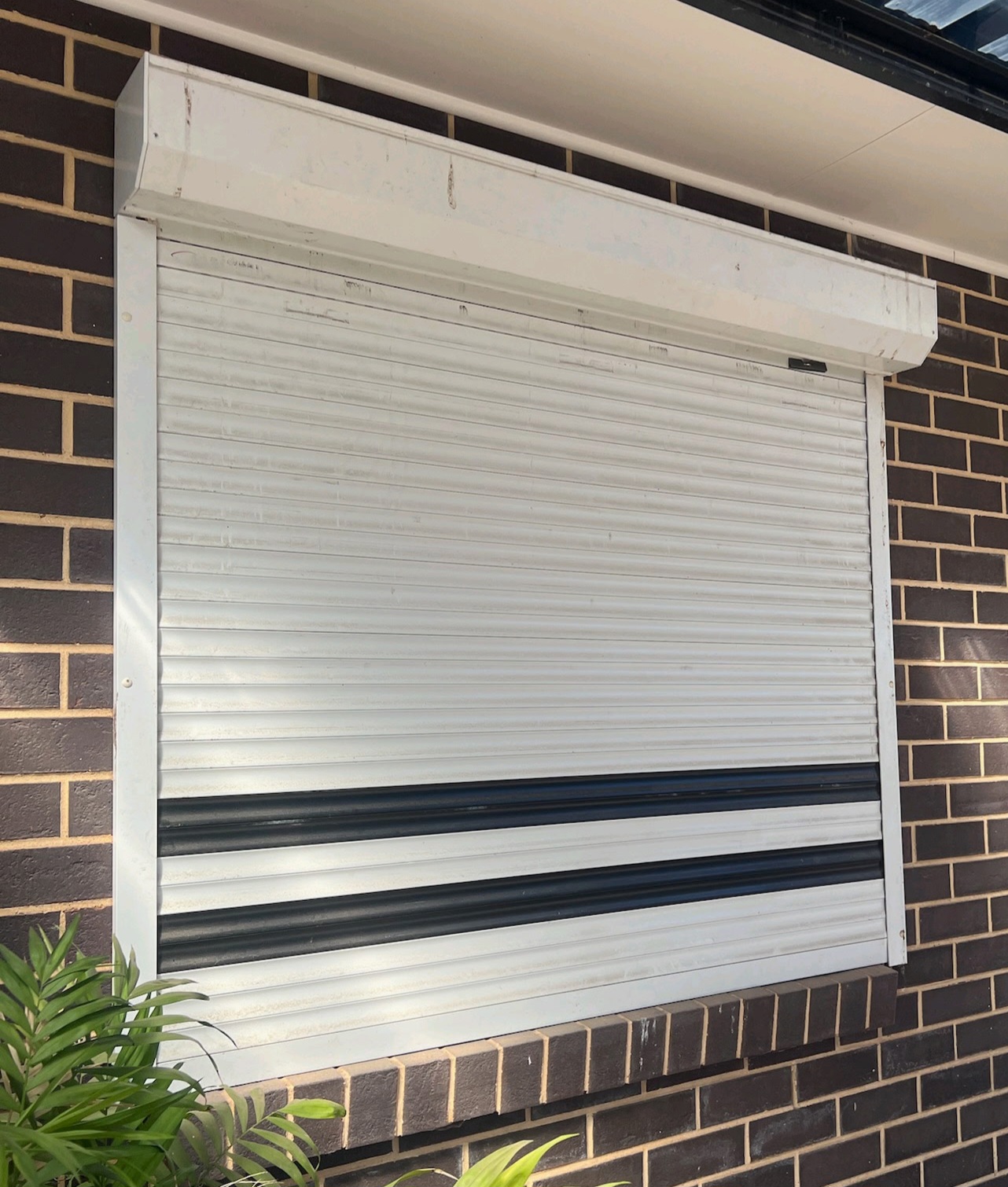
The curtain is the visible face of the shutter, made up of individual horizontal slats that interlock along their top and bottom edges. These slats are typically extruded aluminium or steel if a commercial shutter, with aluminium far more common in residential Adelaide installations because of its natural resistance to corrosion in coastal and high-humidity conditions. Many residential slats are available with a foam-filled core, which substantially improves insulation and noise reduction. A foam-filled slat transfers significantly less heat than an open-profile equivalent, which makes a real difference during Adelaide’s extreme summer heat.
The slat profile you choose at installation directly determines how much insulation, light control, and security your shutter provides over its lifetime.
Sitting at the top of the opening inside a protective hood or pelmet box, the axel is where the curtain coils each time the shutter opens. The axel also houses either the spring and counterbalance mechanism in manual systems or the motor and gearbox assembly in electric & battery ones. Getting the axel diameter right matters, because a axel that is too narrow forces the curtain to stack unevenly, which puts strain on the slats, the end caps, and the barrel brackets over time.
Guide rails, housing, and the bottom rail
Guide rails run vertically on each side of the opening, keeping the curtain tracking straight as it travels up and down. The slat edges sit inside these rails, which prevents wind load from pushing the curtain inward and stops anyone lifting the shutter sideways out of its track. Without properly fitted guide rails, your curtain will drift, jam, or pull free of the opening under pressure.
Your bottom rail is the heaviest single component in the curtain assembly. It adds the downward weight that keeps the shutter taut when fully closed and acts as the anchor point for some locking bars in manual systems. End locks fitted to the bottom rail in some models also engage with the guide rails, preventing forced lateral entry, which is one of the more important security features built into a properly specified roller shutter.
How manual roller shutters work
Manual roller shutters rely on physical force balanced by a spring counterbalance system inside the axel. When you pull a strap or crank a handle, the curtain either unrolls from the axel downward or recoils upward around it. The spring mechanism is what makes this manageable. Without it, you would be lifting the full dead weight of the curtain and bottom rail every single time, which on a wide shutter could exceed 20 kilograms. The spring absorbs much of that load, so the effort you apply actually moves the curtain smoothly rather than fighting against gravity.
A correctly positioned spring is the single most important factor in how well a manual roller shutter operates, and tension that drops over time is a common cause of shutters that feel heavy or refuse to stay open.
Locking and securing a manual shutter
When you fully lower a manual shutter, the end locks on the bottom rail engage automatically with slots in the guide rails in some models. This mechanical engagement is what provides the primary security resistance against forced entry from outside. Many systems also include an interior locking bar that spans the width of the curtain and locks into both guide rails independently, giving you a secondary barrier that significantly increases the effort required to force the shutter open.
Because every part of this system is mechanical rather than electronic, diagnosing faults in a manual shutter is straightforward once you know what each component does. A shutter that drops too fast usually has a weak or broken spring. One that is difficult to raise often has a strap that has stretched, or a spring tension that needs adjustment by a qualified technician.
How electric roller shutters work
Electric roller shutters replace the strap mechanism with a tubular motor mounted directly inside the axel. This motor drives the axel to rotate in either direction, which either coils the curtain up or releases it downward. When someone asks how do roller shutters work in an electric context, the answer comes down to a sealed motorised unit that does the physical work for you, eliminating the need to pull straps or turn cranks. The result is a smoother, more consistent operation that suits larger or heavier shutters where manual operation would be impractical.
The motor and gearbox assembly
The tubular motor sits inside the axel along its central axis, connected at one end to a fixed mounting bracket and at the other to the barrel itself. When you press a button on your wall switch or remote, the motor receives a low-voltage signal that tells it which direction to turn. The gearbox reduces the motor’s rotational speed while increasing its torque output, meaning the motor does not need to spin fast to generate enough force to move a heavy curtain smoothly and without strain.
Choosing a motor rated for the actual weight of your curtain is critical. An undersized motor overheats under load and fails far sooner than its rated service life.
The motor housing is fully sealed against dust and moisture, which matters considerably in Adelaide’s conditions where summer dust storms can be severe. Most motors designed for residential use run on standard 240V mains power with a built-in transformer, while some systems support 24V DC motors that draw less power and run more quietly. Both types connect to the same basic controls, so the choice often comes down to shutter size, usage frequency, and budget.
Limit switches and position control
Limit switches are small adjustable mechanisms built into the motor that tell it exactly where to stop at the top and bottom of travel. Without correctly set limits, the motor would continue running after the curtain reaches full open or fully closed, stressing the barrel brackets, bottom rail, and the motor itself. Once a technician sets the limits correctly at installation, your shutter stops precisely at the same point every single time without you needing to think about it.
Adjusting limit switches requires the right tools and knowledge of the specific motor model involved. If your electric shutter is stopping short, over-travelling, or reversing unexpectedly, the limit settings are the first place a qualified technician will look. Drifting limits are a relatively common service issue and straightforward to correct before they cause secondary damage to other components.
Controls, remotes and smart home options
Once you understand how do roller shutters work mechanically, the next layer worth covering is how you actually tell the system what to do. Electric roller shutters accept signals from several different input types, ranging from a simple button on the wall to a fully integrated smart home platform. The control method you choose determines how convenient, flexible, and future-proof your installation will be, so it is worth thinking about before the motor goes in rather than afterwards.
Wall switches and handheld remotes
A hardwired wall switch is the most common control option for residential electric roller shutters in Adelaide. It connects directly to the motor’s control board and gives you a simple three-position switch: up, stop, and down. Most wall switches are installed near the door or window they control, which makes them intuitive and reliable since there are no batteries, frequencies, or pairing requirements to worry about.
A handheld remote adds convenience by allowing you to operate your shutter from anywhere within radio range, typically 20 to 30 metres for a standard 433 MHz receiver.
Remotes pair with a receiver unit fitted to the motor or wired into the control circuit, and most modern systems allow multiple remotes to pair with a single receiver. This suits households where several people need to operate the same shutter independently. If you lose a remote, you can delete its code from the receiver and pair a new one without replacing any hardware, which is a straightforward process most technicians can complete during a standard service visit.
Smart home integration
Many current roller shutter motors support integration with smart home platforms such as Google Home or Amazon Alexa through a compatible Wi-Fi or Zigbee bridge module. Once connected, you can operate your shutters by voice command, set schedules through an app, or tie them to automations based on time of day or temperature sensors. For Adelaide homes where blocking early morning sun before the household wakes is a practical priority, a scheduled open and close cycle can make a genuine difference to indoor comfort without any manual input.
Some higher-end systems also support sun and wind sensors that trigger the shutter automatically when light intensity or wind speed crosses a set threshold. These sensors connect directly to the motor controller, so the shutter responds independently of any app or network connection, which keeps the automation reliable even during an internet outage.
Safety, locks and emergency operation
Safety features are built into some roller shutter systems at multiple levels, and understanding how they interact helps you keep the system reliable without creating new hazards. Whether you’re focused on how do roller shutters work during a power failure or simply want to know what stops a motorised shutter from trapping something beneath it, each safety mechanism serves a specific and practical purpose. Neglecting any of them during routine maintenance can turn a minor fault into a significant problem.
Safety features built into electric systems
Some Modern electric roller shutter motors include an auto-reverse function that triggers when the motor encounters unexpected resistance mid-travel. If the curtain strikes an object during its downward movement, the motor detects the spike in load, stops, and reverses direction automatically. This protects people, pets, and property from being trapped beneath a closing shutter, and it also reduces mechanical stress on the motor, barrel, and guide rails when an obstruction occurs.
Regularly testing your shutter’s auto-reverse by placing a firm object beneath the bottom rail during a close cycle confirms the sensitivity is correctly calibrated and the function is still active.
Thermal overload protection is a second built-in safeguard in most quality motors. If the motor runs continuously beyond its duty cycle, the thermal cutout disconnects power until the motor cools to a safe operating temperature. This matters most in high-use commercial settings where a shutter may cycle many times per hour.
Manual override and emergency release
A manual override lets you operate your electric shutter without mains power, which becomes essential during a blackout or motor fault. Some tubular motors include a hex key socket or pull-cord mechanism that disengages the gearbox, allowing you to move the curtain by hand until power is restored or a technician arrives. The override point is typically accessible through a small opening in the motor end cap, inside the pelmet box.
Knowing where your override is located before you need it is genuinely important. In a fire evacuation or security situation, you cannot afford to spend time searching for the release mechanism. Check your motor’s documentation to locate and test the override during daylight, on a clear day, so the process is familiar when the pressure is on.
- Locate the override socket or cord on your motor before an emergency occurs
- Keep the correct hex key or pull handle stored near the shutter
- Test the override annually to confirm the gearbox disengages cleanly
- Re-engage the gearbox fully after any manual operation to restore normal function
Installation and compliance in South Australia
Before a new roller shutter goes in, understanding what South Australian regulations require saves you from costly corrections after the fact. Installation is not simply a matter of bolting a barrel to a wall and feeding slats into guide rails. The way your shutter integrates with the building structure, the electrical wiring for motorised units, and the fire safety requirements for certain property types all fall under specific codes that apply in South Australia. Getting these right from the start protects your investment and keeps your home or business compliant.
What SA building and electrical codes cover
South Australia follows the National Construction Code (NCC), which sets the baseline for how building products including roller shutters must be installed relative to structural elements, egress paths, and fire safety zones. If your shutter is going over a window or door that forms part of a fire-rated assembly, the shutter itself may need to meet a specific fire-resistance level rating, and not every standard residential shutter qualifies. Your installer should be able to confirm the product specification against your building’s classification before work begins.
Always ask your installer to confirm that the product they are supplying carries the necessary certifications for your specific building type and intended use.
Electrical work on motorised shutters must be carried out by a licensed electrician under South Australian law. Connecting a tubular motor to mains power is not a task for general handypeople, regardless of how straightforward the wiring looks. The electrical installation also needs to comply with AS/NZS 3000 wiring rules, which govern cable routing, circuit protection, and isolation requirements. A compliant installation protects you from liability and keeps your home insurance valid.
Choosing the right installer
Selecting an installer who genuinely understands how do roller shutters work at a structural and regulatory level makes a significant difference to the long-term performance of your system. You want someone who measures the rough opening accurately, accounts for lintel depth and reveal dimensions, and selects a motor rated correctly for the curtain weight rather than fitting whatever is cheapest on the shelf. Poor installation causes most of the premature faults our technicians see across Adelaide, including misaligned guide rails, over-stressed barrels, and limit switches that were never set correctly in the first place.
Ask your installer whether they carry current public liability insurance and are familiar with local council requirements for your suburb, particularly if your property sits in a heritage zone or bushfire-prone area where additional restrictions may apply.
Troubleshooting and maintenance checklist
Knowing how do roller shutters work gives you a real advantage when something goes wrong. Most faults follow predictable patterns, and catching them early through routine checks prevents minor wear from turning into an expensive repair or a shutter that fails at the worst possible moment.
Common faults and what causes them
Identifying the symptom correctly is the fastest route to the right fix. A shutter that feels heavy on the way up almost always points to a worn or under-tensioned spring in a manual system, or a motor that is working against an obstruction or misaligned guide rail in an electric one. A shutter that drops faster than it should, or will not stay in a raised position, typically means the spring has lost tension and needs adjustment by a qualified technician rather than a DIY fix with a strap or bungee cord.
Unusual noises tell you a lot about where the problem sits. Grinding or scraping sounds during travel usually indicate a slat that has come partially out of the guide rail, a bent end cap, or debris lodged in the rail itself. Clicking or stuttering in an electric motor points to a limit switch that has drifted from its set position, which your technician can correct during a standard service call.
Never continue operating a shutter that grinds, sticks, or reverses unexpectedly, as forcing it through the fault puts stress on every connected component and turns a small problem into a large one.
Your routine maintenance checklist
Consistent maintenance extends the life of your shutter significantly, and most of it takes only a few minutes per month. Run through this checklist every three months to keep your system in reliable condition:
- Wipe the guide rails clean with a dry cloth to remove dust and grit that causes wear on slat edges
- Apply a silicone-based lubricant to the guide rails along their full length, avoiding oil-based products that attract dirt
- Check the strap or pull cord for fraying, cracking, or stretching and replace it before it snaps
- Test the full open and close cycle to confirm the shutter travels smoothly without sticking or hesitating
- Inspect the bottom rail for visible damage or bent end locks that may prevent proper engagement with the guide rails
- Verify that the auto-reverse function on electric systems responds correctly to a firm obstruction placed beneath the curtain
Scheduling a professional service once a year covers the items you cannot safely reach or assess yourself, including spring tension calibration, motor thermal checks, and electrical connection inspections.
Next steps for your roller shutters
Understanding how do roller shutters work puts you in a far better position to spot early warning signs, carry out basic upkeep, and make confident decisions about repairs or upgrades. You now know what each component does, how manual and electric systems differ, and what keeps both running reliably over the long term. That knowledge translates directly into fewer unexpected failures and a longer service life for your investment.
If your shutter is already showing signs of wear, whether that is a heavy pull, a grinding noise, or a motor that hesitates mid-travel, acting on it sooner rather than later prevents the problem from spreading to other components. The Adelaide team at Roller Shutter Repairs Adelaide is ready to assess your system, carry out repairs, or guide you through a manual to electric conversion. Book your roller shutter service in Adelaide and get your system back in reliable working order.