Roller Shutter Motor Not Working: Adelaide Troubleshooting
You press the button, and nothing happens. A roller shutter motor not working is one of the most common calls we get at Roller Shutter Repairs Adelaide, and it’s always at the worst possible time. Whether your shutter is stuck halfway down or refuses to respond entirely, the frustration is real, especially when your home or business security is on the line.
The good news? Not every motor fault means you need a full replacement. Some issues have surprisingly simple fixes you can check yourself before picking up the phone. Others, though, do need hands-on diagnosis from a qualified technician, and knowing the difference saves you both time and money. With over 20 years of experience repairing roller shutter motors across Adelaide, we’ve seen just about every failure mode there is.
This guide walks you through the most common causes of roller shutter motor failure, step-by-step troubleshooting you can safely do at home, and clear guidance on when it’s time to call in a professional.
Safety first and what you need
Before you touch anything, take a moment to understand what’s safe to check yourself and what isn’t. Roller shutter motors run on 240V mains electricity, which means internal wiring, motor terminals, and control boards are strictly off-limits unless you’re a licensed electrician. You can safely inspect external components, test remotes, check power supply points, and look at the physical shutter itself. Anything that involves opening the motor housing or touching exposed wiring is a job for a qualified professional.
Know your limits before you start
A roller shutter motor not working doesn’t automatically mean you need to pull anything apart. Many faults sit outside the motor entirely, in the power supply, remote, or the physical shutter curtain. Start by switching off power at the wall before touching any part of the shutter mechanism. Never work on the motor while the shutter is partially raised without support, as the curtain can drop suddenly and cause serious injury. If you’re unsure at any point, stop and call a technician.
If the motor housing feels hot to the touch or you notice a burning smell, switch off power at the breaker immediately and do not attempt any further checks yourself.
Your Adelaide suburb may also experience voltage fluctuations during extreme heat events, which can trigger thermal overloads inside motors. Keep that in mind if the fault appeared on a particularly hot day.
Tools and materials you’ll need
Having the right items ready before you start means you won’t need to stop mid-check. You don’t need specialist equipment for the steps in this guide, just a few common household items. Here’s what to have on hand:
- Flat-head and Phillips head screwdrivers (for control panel covers)
- Fresh AA or AAA batteries (for remote testing)
- A working power board or extension lead (to test power points)
- A torch or headlamp (for inspecting tracks and slats in low light)
- A step ladder (if your motor unit is mounted high on the wall)
- A cloth (for wiping down guide rails)
- Your motor’s manual, if you still have it (for reset codes and limit switch locations)
Keep your phone nearby too. If a step in this guide reveals something beyond a simple fix, you’ll want to contact a professional straight away.
Step 1. Check power, switches and remotes
The first place to look when your roller shutter motor is not working is the power supply. A tripped circuit breaker or a blown fuse accounts for a surprising number of callouts, and it takes less than two minutes to rule out. Check your switchboard for any tripped breakers on the circuit your shutter uses. Reset any tripped breaker and try the shutter again before moving on.
Check the power supply and wall socket
Your motor draws power from a dedicated circuit or a standard power point, depending on the installation. Plug a lamp or phone charger into the same power point your shutter uses to confirm it delivers electricity. If the point is dead, the fault is upstream, not in the motor itself.
- Check your switchboard for tripped breakers or blown fuses
- Reset any tripped breaker fully: switch it off, then back on
- Test the power point with a different appliance
- If using a power board, plug the motor directly into the wall instead
If the power point is working but the shutter still won’t move, check your remote and wall switch before assuming the motor has failed.
Test your remote and wall switch
A flat or faulty remote battery causes more faults than most people expect. Replace the batteries with fresh ones, then hold the remote close to the motor unit and try again. If the shutter responds, you’ve found the issue without touching the motor at all.
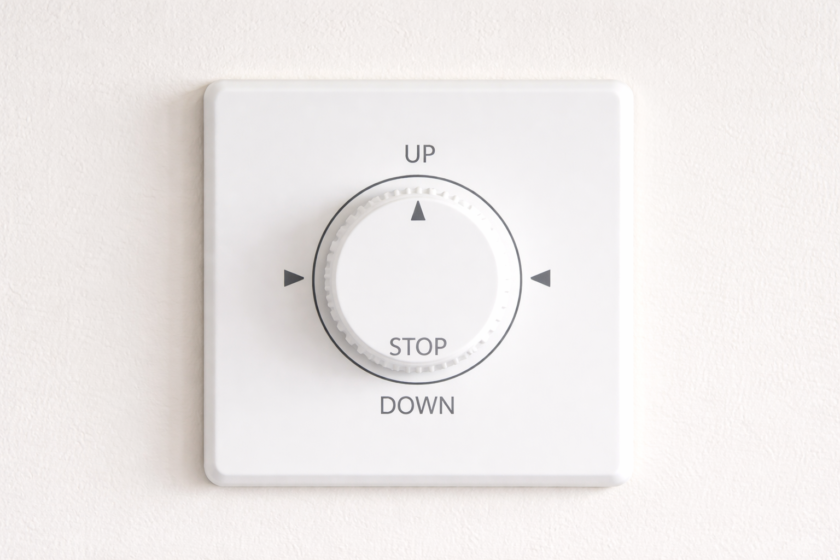
Your wall switch can also fail independently of the remote. Press the wall switch while someone else watches the motor for any movement, light, or sound. If one control works but the other doesn’t, the faulty component is identified and can be replaced without any motor work.
Step 2. Reset the motor and controls – call the experts on 0414611662
If the power checks out but your roller shutter motor is not working, a reset is the next logical step. Many modern roller shutter motors include built-in protection circuits that cut power automatically when they detect an overload, obstruction, or thermal fault. Once the underlying condition clears, the motor stays locked out until you reset it manually.
Perform a hard reset on the motor
A hard reset clears any stored fault condition and forces the motor to restart from scratch. The exact method varies by brand, but the general process is similar across most units. Switch off the power at the wall or breaker and leave it off for at least 30 seconds. Restore power and listen for a short beep or watch for an indicator light, which signals the motor has completed its restart sequence.
If your motor manual lists a specific reset procedure, follow that process precisely, as some brands require a button-hold sequence before you cycle the power.
Here is a general reset sequence that works across most common motor types:
- Switch off the power at the wall
- Wait 30 seconds
- Restore power
- Press and hold the stop button on the wall switch for 5 seconds
- Test the shutter with both the wall switch and remote
Re-sync your remote to the motor
Completing a reset sometimes clears the pairing between your remote and the motor receiver, which means the shutter won’t respond until you re-sync them. Check your motor manual for the pairing procedure, as it typically involves holding a learn button on the motor unit while pressing a button on the remote. Most motors confirm a successful pairing with a short movement of the shutter curtain.
Step 3. Fix jams, tracks and slats
A roller shutter motor not working is sometimes the motor’s way of protecting itself. Most motors include auto-stop protection that cuts the drive the moment it detects resistance beyond a set limit. If a physical jam or track obstruction is present, the motor shuts down before it burns out, meaning the motor itself may be perfectly fine.
Inspect the guide rails and tracks
Dirt, debris, and bent guide rails are the most common physical causes of shutter failure in Adelaide, particularly after summer storms or construction work nearby. Run your hand along both vertical tracks and look for anything blocking the curtain’s path.
Here’s what to check along each guide rail:
- Built-up grime or dust inside the channel – wipe with a damp cloth
- Bent or warped sections of rail caused by impact damage
- Foreign objects such as leaves, small stones, or loose screws lodged in the track
- Missing or dried-out lubrication on the rail surface – apply a silicone-based spray
Never use WD-40 on roller shutter tracks, as it attracts dust and creates more build-up over time.
Check the slat curtain for damage
Individual slats can buckle, crack, or separate from their interlocking joints, especially on older aluminium curtains. Run the shutter manually if your system allows it, and watch each slat as it moves through the guide. Any slat that catches, bulges, or sits out of alignment with its neighbours is likely causing the obstruction.
Replacing a single damaged slat is a straightforward repair that a technician can complete in one visit, restoring full curtain movement without the need for a complete replacement.
Step 4. Decide if the motor needs replacement – call us on 0414611662
If you’ve worked through the previous steps and your roller shutter motor not working issue persists, the motor itself may have reached the end of its serviceable life. Most roller shutter motors last between 10 and 15 years with regular use, and Adelaide’s extreme summer heat accelerates wear on internal components, particularly capacitors and winding insulation.
Signs the motor has failed beyond repair
Some faults are clear indicators that internal motor damage has occurred and no reset or external fix will resolve the problem. Recognising these signs early stops you from wasting time on further checks.
Watch for these specific warning signs:
- Burning smell or smoke from the motor unit at any point
- The motor hums but produces no movement, which points to a failed capacitor
- Visible burn marks or corrosion on the motor casing or control board
- The motor runs in one direction only and refuses to reverse
- Persistent tripping of the circuit breaker every time power is restored
If you notice any of the above, do not attempt to run the motor again, as further operation can cause additional damage to the wiring or curtain mechanism.
What to expect from a motor replacement
A motor replacement is a single-visit job for an experienced technician and, in most cases, requires no structural changes to your existing shutter housing. Replacing the motor is almost always more cost-effective than replacing the entire shutter system when the curtain and tracks remain in good condition.
Here’s what a standard motor replacement visit covers:
- Removal of the old unit and inspection of the mounting bracket
- Matching the correct torque rating to your curtain weight and size
- Installation and wiring of the new motor
- Travel limit programming so the shutter stops at the correct positions
- Re-syncing your existing remote and wall switch where compatible
Get help if you want it
Working through this guide covers the most common causes of a roller shutter motor not working, and many faults do turn out to be a tripped breaker, a flat remote battery, or a simple track obstruction. But if you’ve checked the power, reset the motor, cleared any physical jam, and the shutter still won’t respond, the fault sits deeper than anything safe to tackle without proper tools and training.
That’s where our team comes in. Roller Shutter Repairs Adelaide has been diagnosing and fixing motor faults across Adelaide and surrounding suburbs for over 20 years, with no call-out fees and fast response times that get your shutter back in service without delay. Whether you need a quick repair or a full motor replacement, we carry quality parts and match the right motor to your specific curtain and housing setup.
Book a roller shutter motor repair in Adelaide and we’ll have a technician out to you promptly.