What Is A Roller Shutter? Types, Benefits & Vs Roller Doors
If you’ve ever asked what is a roller shutter, you’re not alone. It’s one of the most common questions we hear from Adelaide homeowners and business owners, especially those weighing up their options for security, insulation, or weather protection. The answer is straightforward, but the details matter when you’re deciding what’s right for your property.
A roller shutter is more than just a barrier over a window or doorway. Different types suit different situations, and understanding how they work helps you make a confident choice, whether you’re considering a new installation or trying to figure out why your existing shutter isn’t working properly. That’s where our team at Roller Shutter Repairs Adelaide comes in, with over 20 years of hands-on experience servicing shutters across the Adelaide region.
This guide covers everything you need to know: what roller shutters are, the main types available, their key benefits and drawbacks, and how they compare to roller doors. By the end, you’ll have a clear picture of whether a roller shutter is the right fit for your home or business.
Why roller shutters matter in South Australia
South Australia’s climate and conditions put most building materials under serious stress. Adelaide summers regularly push past 40°C, and much of the region sits in bushfire-prone zones, which makes protection from heat, fire, and wind a genuine everyday concern rather than an occasional worry.
Once you understand what a roller shutter is and what it can actually withstand, it becomes clear why so many Adelaide properties have them fitted on windows, garages, and commercial shopfronts.
Adelaide’s climate puts your property under pressure
Extreme heat, dust storms, and strong winds are a regular part of life across Adelaide’s suburbs. A roller shutter forms a physical barrier against radiant heat, which can noticeably reduce your cooling costs during summer. In bushfire risk areas, shutters rated to BAL (Bushfire Attack Level) standards offer a level of protection that ordinary blinds or curtains simply cannot provide.
Hailstorms and strong southerly winds also affect properties throughout the Hills and coastal areas. Your windows take the brunt of severe weather without adequate cover, and a roller shutter significantly reduces the risk of broken glass or wind pressure damage during those events.
Security is a genuine concern across Adelaide
Break-ins and opportunistic theft affect both residential and commercial properties across the city. A roller shutter provides a solid physical deterrent that is far harder to get through than a standard window lock or flyscreen. For business owners with shopfronts or warehouses, overnight security becomes far simpler when roller shutters are part of your setup.
Your privacy and light control improve as well. Many roller shutter designs use perforated slats that allow airflow while blocking the view from outside, so you are not trading ventilation for security.
How roller shutters work and what they’re made of
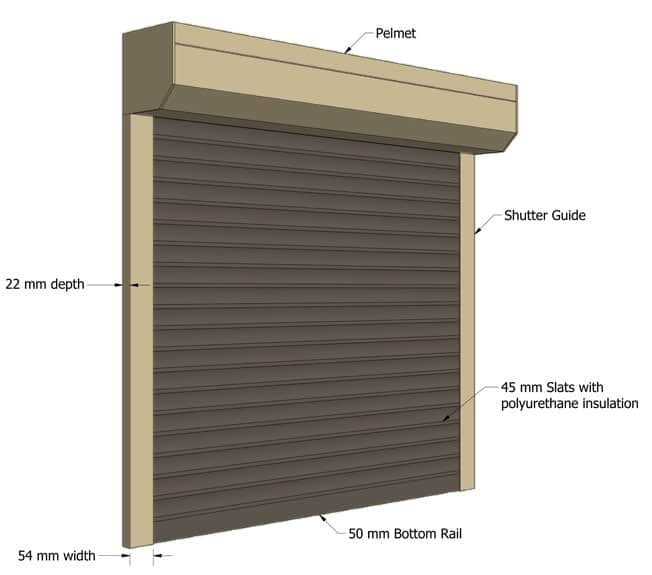
A roller shutter operates on a simple principle: horizontal slats link together to form a continuous curtain that rolls up into a compact housing box mounted above the opening. When you open the shutter, the slats coil around a central barrel inside that box. When you close it, they unroll and stack flat across the window or doorway. The guide channels running down each side keep the curtain aligned and hold it firmly in place.
The materials that make them durable
Most shutters use aluminium slats as the core material because aluminium handles heat, corrosion, and physical impact well without becoming prohibitively heavy. Some commercial applications use steel slats for higher security ratings. The housing box and the guide channels on either side are typically aluminium as well, keeping the overall weight manageable and maintenance relatively straightforward.
Understanding what is a roller shutter at a material level helps you choose the right spec for your property’s specific conditions.
Foam-filled slats add insulation value on top of the base aluminium structure, which is worth considering if reducing heat transfer through your windows is a priority. Perforated slats let air and some light pass through while still providing privacy, giving you flexibility depending on how you use the space.
Types of roller shutters and control options
When you think about what is a roller shutter for your property, the type you choose shapes how it performs day to day. Roller shutters generally fall into two main categories based on where the housing box sits: built-in (fitted into the wall or lintel) and surface-mounted (fixed to the face of the building). Built-in models look cleaner and suit new builds or renovations, while surface-mounted units work well as retrofits on existing windows and doorways.
Manual vs electric control
Your control method affects both convenience and long-term reliability. Manual shutters use a strap, crank, or gear system that you operate by hand, which keeps upfront costs lower. Electric shutters connect to a motor housed inside the barrel and run from a wall switch or remote control. Many newer systems also support smart home integration, letting you schedule openings or operate shutters directly from your phone.
Electric motors make daily use far easier, especially for larger shutters or anyone with limited mobility.
Residential vs commercial shutters
Residential shutters typically use lighter aluminium slats suited to windows and garages. Commercial roller shutters are built for heavier daily cycles, with thicker steel or reinforced aluminium that meets higher security demands. Matching the right specification to your application means the shutter performs reliably over time and reduces the risk of premature wear.
Pros, cons and typical costs
Understanding what is a roller shutter also means knowing where it adds value and where it has limits. Roller shutters deliver strong security, thermal insulation, and weather protection in one product, making them a practical investment for most Adelaide properties.
Getting the specification right from the start saves you from avoidable repair costs down the track.
Where roller shutters perform well
Roller shutters reduce heat transfer significantly, which lowers your cooling bills across Adelaide’s hot summers. They also act as a solid physical deterrent against break-ins, and they protect your windows from hail and flying debris during severe weather. Noise reduction is a genuine bonus if your property sits near a busy road or flight path.
Limitations and typical costs to expect
Upfront installation costs vary depending on size, material, and control type. For a standard residential window in Australia, you can expect to pay between $400 and $900 per shutter, with motorised units sitting toward the higher end. Larger commercial shutters cost considerably more. The main trade-off is the initial outlay, plus you need to budget for periodic servicing to keep motors and slats performing reliably over time.
Roller shutters vs roller doors
People often use these terms interchangeably, but they refer to different products with different applications. Understanding what is a roller shutter versus what is a roller door helps you choose the right product for your specific opening.
The clearest way to tell them apart is by where they’re typically installed and what they’re primarily designed to do.
Key differences in design and use
Roller shutters are designed primarily for windows, commercial shopfronts, and smaller openings. They use lightweight aluminium slats and focus on security, insulation, and weather protection across a range of property types.
Roller doors, on the other hand, are built for vehicle access openings like garages and warehouses. They typically use single-skin or insulated steel panels rated to handle the weight and width of larger openings. The slats are wider and the barrel mechanism is heavier-duty to cope with the physical demands of a garage entrance.
Both systems roll up into a housing above the opening and run on side channels, so they share a similar operating principle. Your choice comes down to the size of the opening, its purpose, and the level of security or insulation you actually need.
Next steps for your property
Now that you understand what is a roller shutter and how it compares to other options, you’re in a solid position to decide what your property actually needs. Whether you’re looking at a new installation, a motor upgrade, or a straightforward repair on an existing unit, getting the right advice early saves you both time and money down the track.
If your shutter is already playing up, do not wait for a complete failure before calling someone in. Small faults with slats, straps, or motors tend to get worse quickly, and a minor repair can turn into a full replacement if you leave it too long. Tackling the problem early keeps your repair costs manageable and your property secure in the meantime.
Reach out to the team at Roller Shutter Repairs Adelaide for fast response times, no call-out fees, and experienced technicians who service all Adelaide suburbs and surrounding regions.