Types of Roller Shutter Motors: Compare Features & Costs
Choosing a motor for a roller shutter isn’t as simple as picking the first unit on the shelf. The four main options—mains-powered tubular, low-voltage DC, battery or solar powered, and heavy-duty chain-drive—each behave differently, come at different price points, and suit different curtain sizes. This guide lines them up side by side so you can see how they work, what they cost, and which one matches your home, shopfront or warehouse.
Selecting the right motor affects more than just how quickly the shutter opens; it influences security, energy use, noise, and the lifespan of every moving part. Read on for a clear breakdown of features, real-world prices and practical tips from Adelaide technicians, making it easy to choose with confidence and avoid costly mistakes.
How Roller Shutter Motors Work
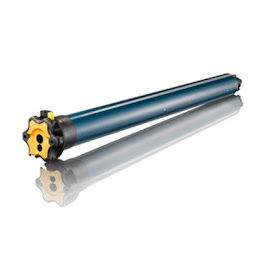
A roller shutter motor is the compact drive that replaces old-school straps or cranks. Most homes and shops use a tubular unit that slips inside the axle (torque tube), while large industrial doors mount an external gear motor on the end plate. Hidden in the headbox, the tube simply spins the curtain up or down.
Activating a wall switch or remote energises the motor. It rotates the drive wheel so the axle winds or unwinds the curtain, while two limit screws halt travel exactly at the headbox and sill. A capacitor boosts start torque and a manual crank keeps you covered during a blackout. Motorised shutters open quicker, resist tampering (no exposed cord) and satisfy BAL bush-fire rules. Models run on 240 V AC, 12/24 V DC or integral batteries; however, the motor most often fitted to a roller shutter door is a tubular 240-volt AC unit rated between 10 and 100 Nm.
Safety and Compliance Fundamentals
Australian standard AS/NZS 60335 requires hard-wiring by a licensed electrician. Industrial motors need a safety brake, thermal cut-out and obstruction detection, and every powered shutter needs a manual override.
Motor Types Explained: Electric, Battery, Solar & Industrial Options
Before we dive into the nitty-gritty of price and performance, it helps to see how the main types of roller shutter motors differ at a glance. Every model below performs the same basic task—turning the axle—but the power source, torque output and level of smarts change the game for installers and owners alike.
Tubular 240 V AC Motors (Mains-Powered)
These sit inside the axle and plug into household mains through a hard-wired lead.
- Torque: 10 – 100 Nm, driving shutters up to roughly 12 m²
- Pros: high lifting power, long service life, most affordable per Nm, wide brand choice
- Cons: needs an electrician and a nearby circuit; stops when the grid goes down
- Best for: ground-floor windows, shopfronts and any site with easy cabling access
Low-Voltage 12 / 24 V DC Tubular Motors
Running from a plug-pack or small battery, these low-voltage units keep wiring simple and safe.
- Torque: 6 – 30 Nm, good for compact windows, kiosks or caravans
- Pros: safer voltage, quieter drive, optional battery backup
- Cons: limited muscle; charging required for high-cycle doors
- Best for: children’s bedrooms, mobile food vans, heritage walls where chasing cables is banned
Battery-Powered & Solar-Charged Motors
A lithium pack inside the headbox recharges via a slim solar panel on the hood or roof.
- Torque: 10 – 20 Nm; 30 – 40 cycles between charges
- Pros: completely cable-free, ideal for retrofits and second-storey windows
- Cons: battery replacement every 5–7 years; output drops on south-facing walls
- Best for: established homes, apartments, off-grid sheds, bush-fire zones with mains isolation risk
External Chain-Drive & Industrial Motors
Mounted on the side plate, these geared workhorses shift real weight.
- Torque: 120 – 1 000 Nm; lifts curtains up to 1 000 kg
- Pros: massive capacity, integrated brake, hand-chain for power loss
- Cons: noisy, heavyweight, pricier and needs steel lintels for mounting
- Best for: warehouses, car parks, shopping-centre grilles, cyclone-rated doors
Spring-Balanced Semi-Automatic Systems
Here a torsion spring does most of the lifting; a tiny motor or manual push finishes the job.
- Pros: cheapest automation, minimal power draw
- Cons: limited to very small aluminium shutters; spring tension needs periodic tweaking
- Best for: bathroom windows, servery hatches, budget upgrades on tiny openings
Smart & IoT-Ready Motors
Available in AC, DC and solar flavours, these motors add integrated radio or Wi-Fi chips (Somfy RTS, Zigbee, Z-Wave).
- Pros: app control, voice assistants, energy monitoring, OTA firmware updates
- Cons: higher upfront cost, depends on home-network reliability
- Best for: tech-savvy owners, Airbnb hosts, accessibility upgrades where remote operation is critical
Side-by-Side Feature Comparison
Still weighing up which motor will give you the best bang for buck? The snapshot below lets you scan the hard numbers—torque, speed, noise and typical purchase price—before drilling into real-world pros and cons. Figures are averages pulled from leading Australian suppliers so you can benchmark any quote that lands in your inbox.
Comparison Table: Torque, Speed, Noise, Energy Use & Price
| Motor type | Torque range (Nm) | Max shutter area (m²) | Speed (rpm) | Noise (dB) | Typical motor price (AUD) |
|---|---|---|---|---|---|
| 240 V AC tubular | 10–100 | 4–12 | 12–17 | 45–55 | $280–$950 |
| 12/24 V DC tubular | 6–30 | 2–6 | 10–15 | 40–50 | $280–$680 |
| Battery / solar | 10–20 | 3–8 | 10–15 | 40–50 | $400–$650 |
| Industrial chain-drive | 120–1 000 | 15–40+ | 6–10 | 55–70 | $900–$1 500+ |
| Spring-balanced semi-auto | 5–8 | ≤2 | 12–17 | 40–50 | $180–$300 |
Highest torque: chain-drive motors; lowest noise: modern DC and solar units.
Pros, Cons & Ideal Applications
- 240 V AC tubular
- Pros: strongest residential option, low cost per Nm, long lifespan
- Cons: needs electrician, stops in blackout, headbox space required
- Best for: ground-floor windows, retail shopfronts, new builds with open wall cavities
- 12/24 V DC tubular
- Pros: safer voltage, runs from plug-pack, quieter starts, easy backup battery
- Cons: lower torque, extra charger hardware, shorter duty cycle
- Best for: bedrooms, caravans, kiosks, heritage façades
- Battery / solar
- Pros: zero cabling, fast retrofit, keeps running during outages, eco-friendly
- Cons: battery replacements, shaded walls reduce charge, higher upfront cost
- Best for: upper-storey retrofits, off-grid sheds, BAL fire zones
- Industrial chain-drive
- Pros: lifts very heavy doors, built-in brake, manual chain for emergencies
- Cons: loud, bulky, premium price, three-phase wiring on bigger models
- Best for: warehouses, car parks, cyclone-rated commercial shutters
- Spring-balanced semi-auto
- Pros: cheapest motor option, minimal power draw, simple DIY service
- Cons: tiny openings only, spring tension drifts, limited smart add-ons
- Best for: servery hatches, bathroom windows, tight renovation budgets
Costs to Expect: Purchase, Installation, Running & Maintenance
Pricing a new motor isn’t only about the sticker on the box. Add labour, power use and the odd repair and you get the real-world cost of ownership. The figures below are typical for Adelaide homes and small businesses; industrial doors sit at the upper end of each range.
Installation & Electrical Labour
- Licensed electrician or shutter tech: $180– $250/hr
- Time on site: 1–2 hrs for a retrofit; 3–4 hrs for multi-window jobs
- SA electrical safety certificate: $50–$80
Cabling access and wall repairs are the usual wild cards.
Ongoing Running Costs
- Electricity per cycle: 0.05–0.12 kWh → roughly $6–$14 per shutter per year
- Battery replacement: $60–$120 every 5–7 years
- Annual preventative service: $120–$180 (recommended)
Solar motors virtually erase energy costs but still need new batteries eventually.
Repair & Replacement Expenses
- Capacitor swap: $25–$40 in parts + 30 min labour
- Full motor change-over (residential): $600–$750 fitted
- Upgrading manual strap to motor: from $600 all-inclusive, often cheaper than repeated strap repairs
How to Choose the Correct Motor for Your Home or Business
The “best” motor is the one that lifts your curtain safely, fits the available power, survives daily use and still makes sense for the budget. Work through the checkpoints below and you’ll answer the common question “How do I choose a roller shutter motor?” without second-guessing yourself.
Step 1: Calculate Curtain Weight, Width & Drop
Use the rule of thumb Nm = (kg × radius_cm) ÷ 10. Measure the sheet weight, halve the drum diameter for radius, then pick a motor with at least 20 % spare torque. Manufacturer charts list typical weights for 40 mm and 55 mm slats.
Step 2: Check Power Availability & Cable Routes
Is there a GPO in the roof void? If not, low-voltage or solar avoids chiselling walls. Heritage façades and tiled bathrooms often push you towards cable-free battery motors.
Step 3: Match Usage Frequency & Duty Cycle
- <10 cycles/day → standard AC tubular
- 10–30 cycles/day → heavy-duty DC or high-torque AC
-
30 cycles/day → industrial chain or three-phase gear motor
Step 4: Balance Noise, Smart Features & Aesthetics
Bedrooms and studios appreciate 40 dB DC drives. Voice control or app scheduling adds about $70–$120. Order colour-matched headboxes to keep the street view tidy.
Step 5: Align Budget With Long-Term Value
Factor parts, labour and future servicing. Converting three manual shutters to solar can save roughly six minutes of winding per day and boosts resale appeal—often paying for itself within three to four years.
Installation & Upgrade Options: DIY Kits vs Local Professionals
Once you’ve sized the motor, you need to decide who fits it. Two clear paths exist—buy a DIY kit or call a local pro.
DIY Motor Conversion Kits
Most kits arrive with the tube motor, crown and drive, wall switch, screws and instructions. Tools: drill, pop-riveter and multimeter. Risks: mis-set limits, wrong torque, non-compliant 240 V wiring.
Professional Installation & Repairs
Licensed technicians size, supply and fit the motor, issue electrical compliance and preserve the manufacturer warranty. Roller Shutter Repairs Adelaide even offers no-call-out-fee quotes and same-day changeovers across every Adelaide suburb.
Manual-to-Electric Conversion Process
Converting a strap drive takes 45–60 minutes: remove strap, swap axle, slide in motor, set upper/lower limits, wire control and test safety stop—minimal mess, massive convenience upgrade.
Common Problems & Motor Lifespan: Repair or Replace?
Even the best-sized motor eventually tires. Spotting trouble early saves money and prevents the more serious failures that plague all types of roller shutter motors.
Typical Faults & Warning Signs
- Motor hums but won’t turn
- Shutter stalls mid-travel
- Burning smell or hot headbox
- Remote range drops suddenly
- Grinding or clicking noises
Expected Lifespan per Motor Type
- AC tubular: 10–15 years
- Battery/solar: 5–8 years (battery the limiter)
- Industrial chain: 15–20 years with annual service
- Salt air, dust and heat shorten any rating
Decision Tree: Service, Repair or Upgrade
- Check power and reset limits.
- If capacitor blown, replace (<$40).
- Still faulty & motor older than eight years → swap motor.
- When upgrading, consider smart variant; price bump is only about 10–15 %.
Quick Recap & Next Steps
- Mains-powered 240 V tubular motors: punchy 10–100 Nm units from $600–$750, perfect when you already have cabling in place.
- Low-voltage 12/24 V DC motors: whisper-quiet drives at $280–$500, ideal for small windows or spots where safety extra-low voltage is preferred.
- Battery or solar motors: cable-free convenience for $400–$650, keeping upper-storey shutters moving during blackouts.
- Industrial chain-drive motors: heavy-hitters lifting up to a tonne, starting around $900 and stretching beyond $1,500 for three-phase monsters.
Before reaching for the credit card, double-check three things: the curtain’s weight and size, how easy it is to run power, and how many times a day the shutter will cycle. Get those right and the rest—noise, smart features, even colour matching—slots neatly into place.
Still unsure? A professional eye can save hours of guesswork and hundreds of dollars in re-work. Book a free, no-obligation motor inspection with the local experts at Roller Shutter Repairs Adelaide and upgrade your shutters with confidence.